



Reading Time: 7 mins
Every business running paid advertising eventually faces the same question: Google or Facebook? Both platforms command massive advertising budgets, both produce measurable results, and both have passionate advocates who will tell you theirs is the obvious choice. The reality is more nuanced—and more useful—than either camp typically acknowledges.
The Google Ads vs. Facebook Ads debate isn’t really a competition with a universal winner. It’s a strategic question with an answer that depends on your business model, your customer’s buying journey, your budget, and what you’re actually trying to accomplish. Understanding how each platform works, what it costs, and where it genuinely outperforms the alternative is the foundation of paid advertising decisions that produce real returns rather than expensive lessons.
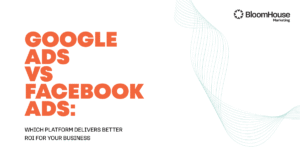
Google Ads vs Facebook Ads: Choosing the Right Platform for Your Budget
The fundamental distinction between Google Ads and Facebook Ads isn’t technical — it’s psychological. Google Ads intercepts people who are actively looking for what you offer. Facebook Ads interrupts people who aren’t looking for anything specific but match the profile of someone who might want what you have. That difference in user intent shapes everything: conversion rates, cost structures, creative requirements, and the type of businesses each platform serves most efficiently.
Neither approach is inherently superior. Demand capture and demand creation are both legitimate, valuable marketing functions. The question is which function your business needs most and which platform delivers it at a cost that produces acceptable returns.
Why Platform Selection Matters for Your Bottom Line
Platform selection is a budget efficiency decision before it’s anything else. Advertising dollars spent on a platform that doesn’t match your business model, customer journey, or competitive environment produce weak results regardless of how well campaigns are executed. A well-run campaign on the wrong platform will consistently underperform a moderately executed campaign on the right one.
Platform misalignment is one of the most common and costly mistakes in small- and mid-sized business paid advertising—often invisible because the campaigns appear to be running correctly while producing leads and conversions at costs that make growth economics unworkable.
How ROI Differs Across Paid Search and Social Media Channels
ROI comparisons between Google and Facebook are complicated by the fact that they typically operate at different stages of the funnel and influence different parts of the customer journey. Google Ads — particularly search campaigns — captures customers at or near the decision stage, producing shorter conversion timelines and more directly attributable revenue. Facebook Ads typically operate earlier in the funnel, building awareness and consideration that may convert through other channels, making direct attribution more complex and last-touch models consistently undervalue their contribution.
This difference means that comparing raw conversion rates or cost per acquisition between the platforms in isolation often produces misleading conclusions. A complete ROI analysis accounts for the full-funnel contribution of each platform rather than evaluating them against the same conversion window and attribution logic.
Cost Structure and Pricing Models Across PPC Advertising Platforms
Google Ads and Facebook Ads use fundamentally different pricing mechanisms, which produce very different cost structures depending on your industry, audience, and campaign objectives.
Google Ads search campaigns operate on a pay-per-click auction model where advertisers bid on keywords and pay only when someone clicks their ad. The actual cost per click is determined by a combination of bid, quality score—a measure of ad relevance and landing page quality—and competitive pressure from other advertisers. Because Google search ads target active buying intent, competition for high-value keywords can drive costs significantly higher than Facebook equivalents, but the conversion rate advantage often justifies the premium.
Facebook Ads uses a CPM (cost per thousand impressions) auction model as its foundation, with cost per click and cost per result derived from that base. Facebook’s targeting precision — demographic, psychographic, behavioral, and interest-based — allows advertisers to reach highly specific audience segments at costs that are typically lower than Google search on a per-click basis, but with lower average conversion rates that partially offset the cost advantage.
Facebook Ads ROI: Measuring Performance and Profitability
Facebook Ads ROI measurement requires more sophisticated attribution infrastructure than Google search campaigns because Facebook’s influence on purchase decisions is frequently indirect and multi-touch. A potential customer who sees a Facebook ad, visits your website, leaves without converting, and returns three days later through a Google search will typically be attributed to Google in a last-touch model—making Facebook invisible in the conversion data despite having initiated the customer journey.
The introduction of iOS privacy changes has further complicated Facebook attribution, reducing the accuracy of pixel-based tracking and requiring advertisers to rely on broader measurement approaches, including modeled conversions, Meta’s own attribution tools, and incrementality testing. Businesses that haven’t updated their Facebook measurement approach since 2021 are likely making budget decisions based on significantly underreported performance data.
Display Advertising Networks and Retargeting Opportunities
Google’s Display Network reaches over 90% of internet users across millions of websites and apps, making it one of the broadest-reach advertising options available. Display campaigns typically produce lower click-through rates and conversion rates than search campaigns but generate impressions at significantly lower costs—making them effective for brand awareness objectives and retargeting campaigns where the audience has already demonstrated intent.
Retargeting — showing ads specifically to people who have previously visited your website, engaged with your content, or interacted with your business — consistently delivers the highest ROI across both platforms. Retargeting audiences have already demonstrated interest, reducing the cold-audience skepticism that drives up acquisition costs, and often need only a specific offer, a social proof element, or a reminder to convert. Well-structured retargeting campaigns on both Google and Facebook regularly produce cost per acquisition rates 50 to 70% lower than cold-audience campaigns—making retargeting budget allocation one of the highest-return decisions in paid advertising management.
Paid Search Marketing vs Social Media Advertising: Performance Metrics That Matter
Google Ads search campaign click-through rate is both a performance indicator and a cost driver. Higher CTR improves Quality Score—Google’s assessment of ad relevance—which reduces cost per click and improves ad position for the same bid. Average search campaign CTR varies by industry and position, but well-optimized search ads targeting high-intent keywords typically achieve CTR in the 5 to 10% range, with top-performing campaigns exceeding those benchmarks.
Quality Score optimization—improving ad copy relevance to target keywords, ensuring tight thematic alignment between keyword groups and ads, and building landing pages that directly fulfill the promise of the ad—is one of the highest-leverage, no-additional-cost improvements available to Google Ads advertisers. A quality score improvement from 5 to 8 can reduce effective cost per click by 30% or more while simultaneously improving ad position—producing more traffic at lower cost from the same daily budget.
Ad Spend Optimization Techniques for Maximum Efficiency
Ad spend optimization is the ongoing management process that determines whether a paid advertising program produces compounding improvements or plateaus at initial performance levels. The core discipline is systematic testing—of audiences, creative, landing pages, offers, and bid strategies with disciplined budget allocation toward what the data confirms is working.
Campaign structure significantly affects optimization efficiency. Tightly themed ad groups in Google Ads — each focused on a specific keyword cluster with ads directly relevant to those keywords — produce better Quality Scores and more interpretable performance data than broad campaigns that mix intent levels and topic areas. A Facebook campaign structure that separates cold audiences from warm retargeting audiences allows algorithm optimization to work more effectively and keeps acquisition cost data clean enough to inform allocation decisions.
Maximizing Your Marketing Investment With BloomHouse Marketing
BloomHouse Marketing builds and manages paid advertising programs across Google and Facebook for businesses that need campaigns to produce measurable revenue, not just activity metrics. From platform selection and campaign architecture to conversion tracking setup, creative development, and ongoing performance optimization, our approach is built around the numbers that determine whether advertising is working — cost per acquisition, return on ad spend, and customer lifetime value — rather than the impression and click statistics that look good in reports but don’t pay the bills.
We’ve managed significant ad spend across both platforms across multiple industries, and we bring that data-informed perspective to every client campaign—applying what the evidence shows works rather than platform preferences or generic best practices.
Ready to know exactly what your ad spend is producing and how to make it work harder? Contact BloomHouse Marketing today to schedule a paid advertising audit and find out where your campaigns are leaving money on the table.
FAQs
1. Which PPC advertising platform delivers faster conversions for e-commerce businesses with limited budgets?
For e-commerce businesses with limited budgets, Google Shopping and search campaigns typically produce faster initial conversions because they capture active purchase intent — reaching people who are already searching for specific products and ready to buy. The conversion timeline is shorter because the prospect is further along in the decision process when the ad appears. Facebook Ads can produce strong e-commerce returns, particularly for products with strong visual appeal or impulse-purchase characteristics, but typically require more budget to test audiences and creative before optimizing for efficient conversion costs.
2. How does Facebook ads ROI compare when targeting cold audiences versus warm website visitors?
The performance gap between cold audiences and warm retargeting campaigns on Facebook is substantial and consistent across industries. Cold audience campaigns — targeting people with no prior brand exposure — typically produce cost per acquisition rates two to four times higher than retargeting campaigns targeting previous website visitors, video viewers, or existing customer lookalike audiences. Warm audiences have already cleared the awareness and consideration hurdles that make cold audience conversion expensive, requiring only the right offer and timing to convert.
3. What conversion tracking mistakes are costing you money across paid search and social channels?
The most costly conversion tracking mistakes include tracking micro-conversions like page views or time-on-site as primary conversion goals, which causes optimization algorithms to optimize for engagement rather than revenue-generating actions. Not implementing the Google Ads conversion tag directly — relying solely on GA4 imported conversions — creates attribution delays that impair automated bidding strategy performance. On Facebook, failing to verify the Meta Pixel and Conversions API implementation post-iOS changes leads to significantly underreported conversion data and algorithm optimization toward incomplete signals. Counting duplicate conversions — tracking both a form submission confirmation page view and a thank-you page view as separate conversion events — inflates conversion numbers and misleads optimization decisions.
4. Can display advertising networks lower your overall cost per acquisition compared to search campaigns?
Display advertising networks generally produce a higher cost per acquisition than search campaigns for direct conversion objectives because display audiences haven’t expressed active intent—they’re being interrupted rather than captured at the moment of search. However, display campaigns can lower overall program CPA in two specific applications. First, retargeting display campaigns—showing ads to previous website visitors across the Google Display Network — produce conversion rates significantly above cold display averages and often below search campaign CPA for the same audience, because the intent signal has already been demonstrated. Second, display campaigns that build awareness and drive branded search volume can improve search campaign conversion rates by warming audiences before they reach the search stage, reducing the cost of the search conversion that follows.
5. How should you allocate ad spend between Google Ads and Facebook based on your industry?
Industry characteristics that favor heavier Google Ads allocation include high-intent transactional search volume, products and services with specific problem-solution search behavior, and B2B services where LinkedIn and Google search are primary discovery channels. Home services, legal, medical, financial, and local service businesses typically see stronger direct ROI from Google Search than Facebook for primary conversion campaigns. Industry characteristics that favor heavier Facebook Ads allocation include visually compelling consumer products; lifestyle and interest-based businesses targeting specific demographic or psychographic profiles whose search behavior doesn’t cleanly segment; and any business whose ideal customer doesn’t necessarily know to search for the specific solution being offered. E-commerce, retail, fitness, beauty, and consumer brands generally find stronger cold-audience acquisition efficiency on Facebook. Most businesses benefit from both platforms serving different funnel stages, capturing active demand and Facebook building awareness and retargeting—with allocation weighted toward whichever platform’s primary function matches your most urgent growth objective.